Showing posts with label Reading. Show all posts

Friday, June 8, 2012

Book Review: Radical


“We are settling for a Christianity that revolves around catering to ourselves when the central message of Christianity is actually about abandoning ourselves.” 
― David Platt, Radical: Taking Back Your Faith from the American Dream


Poverty. Persecution. Suffering. Addiction. Darkness. These are things that consume our world, hold happiness in a stranglehold, and suck the life out of billions of people. This planet we call home is riddled with pain, and those of us who are blessed enough to be removed from such horrors as starvation, disease, and filth so easily ignore it all. It is so easy to sit inside our air conditioned houses on cushy couches and make grandiose plans about our futures.

I do not usually read books that I have never heard anything about, but when I saw a book titled Radical: Taking Back Your Faith From the American Dream, I had to check it out. What I found was a gripping, convicting, inspiring call to action that continues to fill my mind and heart with questions and controversies.

Wednesday, February 29, 2012

Captain John Smith

Captain John Smith is my new favorite European colonizer! Call this a geeky-homeschool-girl moment, but I am fascinated with this guy.

I've learned that he is much, much more than a 2D Disney cartoon character, or just another evil English explorer out to exploit Native Americans. He was a brilliant, adventurous, out-of-the-box kind of guy I would love to have known. He was also extremely pompous, and self-absorbed. In fact, he’d probably be thrilled with his current pop-culture status. 

To be honest, he had something to be proud of. This guy started as the son of an English farmer, who was apprenticed to a shopkeeper at age 15. He wanted none of it, and may have tried to join an expedition with Sir Francis Drake, but John’s father did not approve. Mr. Smith died soon after, however, and his 16-year-old son was away as quickly as possible. He had his indenture canceled (I really wonder how he managed that), and set off to the Netherlands to fight for the Dutch. From here his list of accomplishments grows: winning prize money as a privateer in the Mediterranean, fighting with the Austrians against the Turks and becoming a captain, beheading three Turkish offers in single combat in Rumania, enduring captivity and slavery, escaping slavery by murdering his Turkish master. He was the ripe old age of 24 when he returned to England after all of these adventures. And he was just getting warmed up! Granted, most of what we know about Smith came from his own pen, but the guy couldn't have stretched the truth that much.

Thursday, February 2, 2012

Every Day, A Gift

  • Jesus said, "Peace I leave with you; My peace I give to you; not s the world gives do I give to you. do not let your heart be troubled, nor let it be fearful." (John 14:27)
  • I can do all things through Him who strengthens me. (Philippians 4:13)
  • There is no fear in love; but perfect love casts out fear, because fear involves punishment, and the one who fears is not perfected in love. (1 John 4:18)
  • A psychedelic shadow pattern
  • The grain of humor and pleasure from my brother's off-key singing
  • The fine lines of my Grandmother's hands, brought out by a sprinkling of flour
  • Soaring vultures, which look strangely picturesque
  • Our amazing camping trip in October, doing daring things!
  • Mr. Byron's hands, crinkled and spotted with memories
  • The wrinkled pages of my book, which remind me that I don't need to be perfect

  • The plan for my day out, written on a folded sheet of paper and unfolded to reveal a day of adventure
  • Someone to listen when I need to be heard
  • Someone to bear the burdens I can't possibly bear
  • Someone who knows my end from my beginning
  • Smoky blue clouds that provide the backdrop for a fiery sunset
  • Peanut M&Ms. Which I can resist.
  • Compassion's presentation materials, which bring hope and love to so many
  • Wonderful books from the library
  • Tiny birds nests, beautifully constructed from slender twigs
  • A love of learning inherited from my dad
  • Fleeting frost, soundlessly transforming the world and leaving unnoticed

Thursday, November 24, 2011

100 Reasons I Give Thanks

  1. I have a merciful Savior who loves me, warts and all.
  2. The leaves change color in the fall; they don’t have to, but they do.
  3. My mother is a creative person who “gets” me on so many levels and who loves me to death.
  4. My father is a humorous and loving man who provides well for our family and would do anything for us.
  5. My little brother may be a twerp sometimes, but he’s my twerp and I know that he loves me…deep down.
  6. I have a part-time job with my family that allows me to make a regular paycheck and have plenty of time to listen to books on my iPod.
  7. I am incredibly blessed to have so much extended family living nearby; my grandparents are amazing.
  8. Foggy mornings.
  9. While I may not have many friendships, the ones I have are deep and full of meaning, purpose, beauty, and laughter.
  10. I am in on the Goodwill Secret—and am not afraid to utilize my knowledge.
  11.  I have the freedom to experiment, to explore, to create a future that’s perfectly suited to me.
  12.  I have access to an awesome public library filled with thousands and thousands of books, DVDs, and audio CDs.
  13.  My country grants me freedom of religion, and I need have no fear to worship.
  14.  I am physically fit, capable of doing everything I want to do.
  15.  There are Panini sandwiches and gallons of pesto in the world.
  16.  I have been able to pursue a non-traditional education through homeschooling, CLEP and DSST tests, and online college.
  17.  Despite the fact that my body does not like my fingers and frequently attempts to sever them, I have never been seriously injured.

Wednesday, November 9, 2011

Heart of Darkness

One of the classes I'm taking is called Nonwestern World Literature, and it examines the relations between the cultures of the West and non-West through the literature of both sides. My first graded assignment was to write a post for the class discussion board comparing and contrasting my experiences with cultures other than my own with the adventures described in Joseph Conrad’s Heart of Darkness. I've reproduced my work here for your insight and comments, you can read a short summary of Darkness here.

My own experiences with other cultures show little similarity with the adventures described in Heart Of Darkness, but upon comparing myself with the characters in Joseph Conrad’s novel, I find striking similarities in my reactions to a different culture living in my own community.

Unlike Marlow, I have never been immersed in a Nonwestern country, but where I live you don’t have to cross the border to have experiences with other cultures. I am exposed on an almost daily basis to the world of Hispanic immigrants, whose language, customs, appearance, and ethnic heritage are so different from my own that it is hard to see any common ground between us. There is a temptation to see these people as “foreigners”, no matter how long they’ve lived in America, and their nationality seems to set them apart from the rest of us. In an all-too-human way, this separation can cause us “locals” to feel somewhat superior to the relative newcomers.

This reaction echoes what Marlow said about foreigners being “veiled…by a slightly disdainful ignorance” to Western eyes. The classic reaction of Western civilization to the “exotic” and unfamiliar seems to have been contempt, stemming from an outrageous sense of pride. My own reaction to my Hispanic neighbors is somewhat similar to Marlow’s own—they seem set apart, different, simply “other.” I certainly don’t hate or resent them, but I’m not taking pains to interact with them either. This is where Conrad gives us a great warning: a tiny seed of disdainful ignorance can grow into racial hatred, even insanity.

There is danger in the moment we define ourselves as “us” and “them”. I may live my life on a separate plane from my Hispanic neighbors, without many activities or experiences in common, but the moment I imagine that they are on a lower plane, or even one that is very different from my own, that is when the darkness Conrad warned against can take hold. When I look inside myself and back at someone else who is part of another culture, I can see that their hopes, dreams, loves, strengths, and weaknesses deserve every bit as much respect as mine, and they demand not my pity but my understanding. In Heart Of Darkness, Conrad wrote about what can happen—what has happened—when a root of disdain spawns the brutalization of an entire continent.


Tuesday, October 4, 2011

My Bucket List In Progress


A couple months ago I wrote a post about bucket lists, where I wrote about lifelong goals, living to the fullest, the magic of thinking big, etc. Well, I have since created a list of my own. 

In case you're not familiar with Heritage Makers, it's an awesome online program that gives you the ability to create gorgeous custom storybooks, calendars, canvas prints, greeting cards, invitations, and even personalized playing cards (watch the video introduction here). I used HM to create a 14x11 poster of my bucket list (see the image above) to frame and hang on the wall above my bed as a reminder of my goals.

I call this my "Bucket List in Progress" because it is by no means a concrete thing. I've listed such goals as "write a textbook" and "own a Cavalier King Charles Spaniel" that I may not want to do someday for a myriad of reasons. But this is an outline, a rough sketch, something to aim for. I intend to alter it every few years to accommodate new goals and cross out the ones I've already accomplished, honing it to a razor-sharp edge of intention. 

So without further ado I present to you my current bucket list, with goals listed in no particular order: 

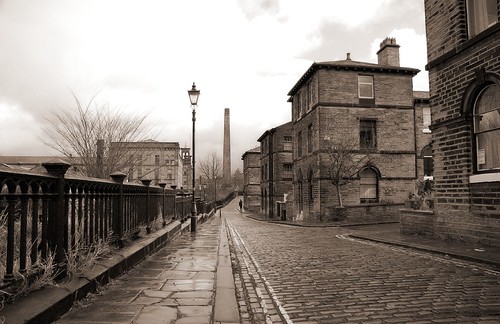
The old streets of Saltaire Village, a photo by Paul Stevenson on Flickr.

1.       Keep it simple
2.       Stay under 130 lbs.
3.       Deep relationships
4.       Create a self-study program for lifelong learning
5.       Find or create work that I love
6.       Live in England
7.       Make a friend in every European country
8.       Fall in love
9.       Discover my reasons for living
10.   Work for myself
11.   Get good at tennis
12.   Ride a horse “in the rough”
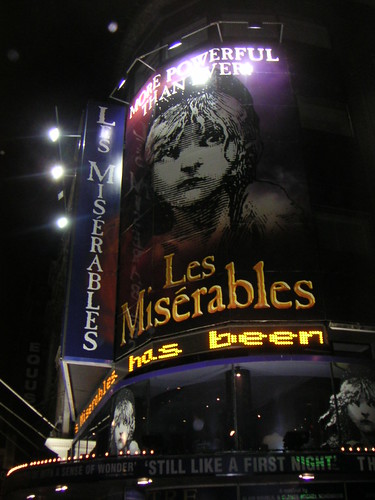
Les Miserables West End, a photo by mart wegman on Flickr.
13.   Learn another language
14.   See a show on Broadway/the West End
15.   Learn to dance
Grayson.., a photo by Bruce Tuten on Flickr.
16.   Scuba dive in a coral reef
17.   Sleep in a British castle
18.   Own a Cavalier King Charles Spaniel
19.   Spread the Gospel
20.   Always tithe at least 10%
21.   Become influential in a godly ministry
It is Finished, a photo by abcdz2000 on Flickr.
22.   See the Northern Lights
23.   Visit
•        The British Museum
•        The Uffizi Gallery
•        The Smithsonian
•        The Louvre
24.   Live at least six months in a foreign country
25.   Tour New England
26.   Live in my “dream cottage” (a white cottage on a New England beach)
27.   Create a lovely garden
cutting loose, a photo by SqueakyMarmot on Flickr.
28.   Become a semi-professional photographer
29.   Become a connoisseur
30.   Read the complete works of Shakespeare
31.   Discover my strengths, weaknesses, passions, and gifts
32.   Never take on a lifestyle of debt
33.   Be a major influence in a child’s life
34.   Prison ministry
35.   Become an expert
36.   Win a prestigious blog award
37.   Write a textbook or study guide
Flags!, a photo by Paul Kehrer on Flickr.
38.   Be a New York Times bestselling author
39.   Go to a Green Bay Packer Game
40.   Make mistakes
41.   Learn to not take offense


And what is your personal opinion of these goals? Do you have a bucket list of your own? Are you willing to post it for the world to see?

Sunday, September 11, 2011

Reading: Who Will You Become?


Notturno by gualtiero

They say that you will be the same person in five years as you are today except for the people you meet and the books you read. It can be (but is not necessarily) difficult to determine which people you will meet. It is, however, the matter of a few mouse clicks to determine exactly which books you will read in the coming days, months, and years. There are millions of books are at your fingertips thanks to sites like Amazon.com, and you haven't an excuse in the world not to buy, beg, borrow, or steal something that could possibly revolutionize your life for the better. 

Anne Lamott, author of such works as Bird by Bird and Traveling Mercies, said that her life was changed by The Only Dance There Is by Ram Dass. U.S. Senator John McCain says that Ernest Hemingway's For Whom The Bell Tolls "seized (his) attention." World-famous career coach Dan Miller credits Earl Nightingale's book The Strangest Secret as giving him the vision to go beyond his family's Mennonite farm to pursue an amazing life. 

Which books will you read before the end of the year?  

If you look at the next five books on your reading list, you will find an uncannily accurate foretelling of the kind of person you will soon be. If you don't have a reading list, the same holds true.

Who might I be after reading these books?
  1. A Million Miles in a Thousand Years by Donald Miller = a better Christian
  2. Notes From a Small Island by Bill Bryson = a better Anglophile
  3. Crime and Punishment by Fyodor Dostoevsky = someone with a better understanding of social alienation, Nihilism, and the idea of the superman
  4. Crush It! by Gary Vaynerchuk = a social-media-savvy girl who cashes in on her passion
  5. On Writing by Stephen King = a better writer


Read about The Book That Changed My Life at Suite101.
Notturno, a photo by gualtiero on Flickr.

Thursday, July 14, 2011

Book Review: War and Peace

"Gazing into Napoleon's eyes, Prince Andrei mused on the unimportance of greatness, the unimportance of life which no one could understand, and the still greater unimportance of death, the meaning of which no one alive could understand or explain"." 
-Leo Tolstoy, War and Peace

My Alternate Title:
War and Russia or Why Napoleon Wasn’t all he Was Cracked up to Be

I don’t know if it’s a small strain of masochism, a wild desire for conversation starters, a love of history and the classics, a past appreciation of Anna Karenina, or the wish to impress the next Russian I meet, but I finally buckled down and read the novel whose title is synonymous with length and boredom. War and Peace by Leo Tolstoy.

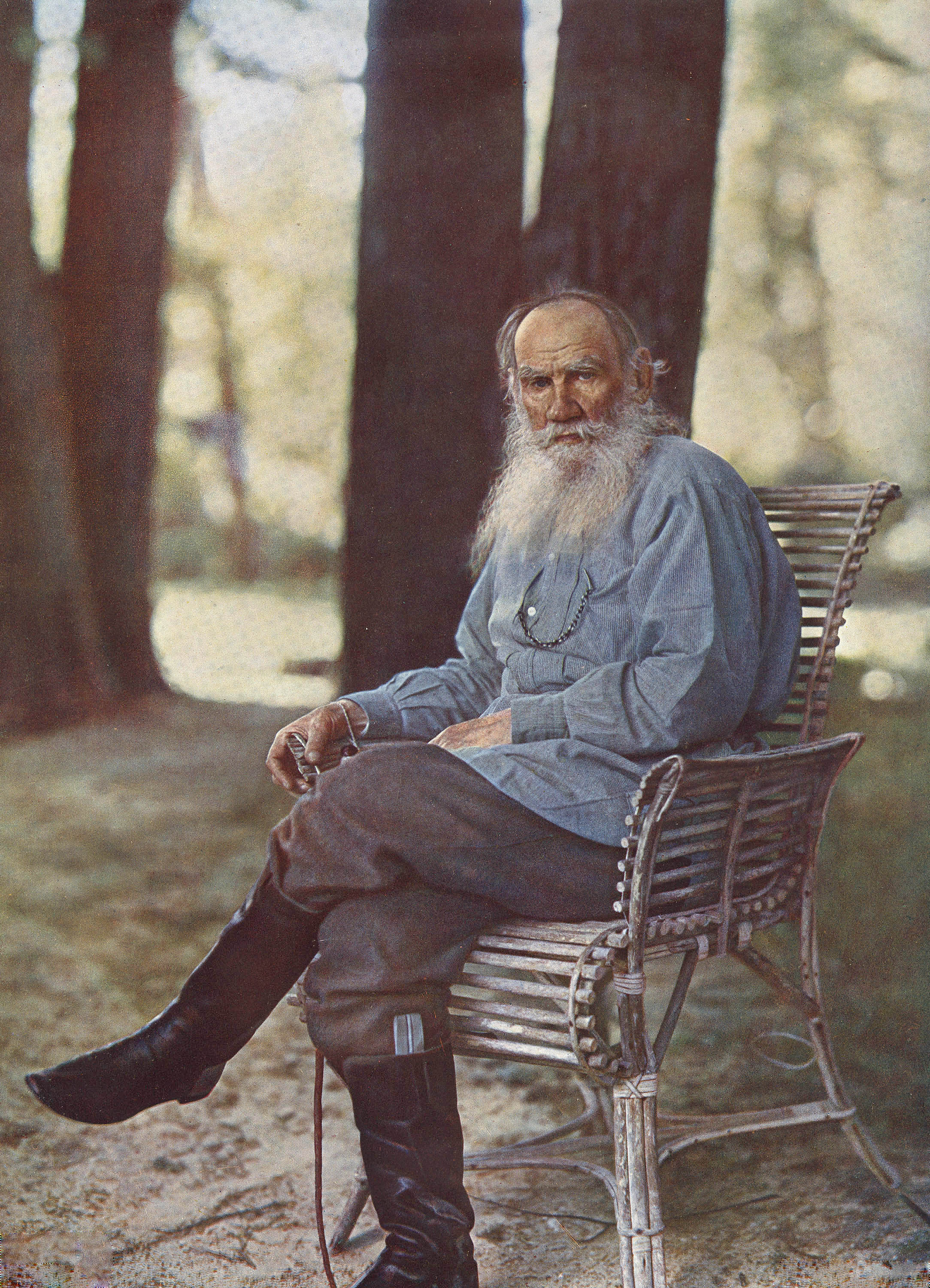
Leo Tolstoy
The book is every bit as long as everyone says, coming in at #14 on the list of the longest novels in Latin or Cyrillic alphabets with a word count of 560,000. It’s actually shorter than another book I’ve read—twice—and enjoyed, Atlas Shrugged, which is #11 with 645,000 words. W&P seemed much longer than Atlas, though, partly because Mr. Tolstoy has a habit of getting on soapboxes and chasing after rabbits. Perhaps he’s not as bad as Victor Hugo in Les Misérables (#17), but he does talk about history and battle sequences constantly. And he included two epilogues. Who does that?

Woven throughout are dozens of weighty themes: unconditional love and forgiveness of enemies, how marriages are painful and shallow when money is all that’s concerned, the meaninglessness of “society life”, the dignity of mankind, international policy, self-sacrifice, and longing for recognition, to name a few. There’s also a fair amount of pure, abstract philosophizing (You find yourself asking things like, “Is fire really an element or is it a phenomena?”). Loving, dueling, gambling, fighting, rescuing, sacrificing, eloping—they all have their place in W&P. You probably knew this already, but don’t pick this one up if you’re looking for a light summer read. Do pick it up if you’re looking for a thought-provoking, meaty classic that sets a very high standard.

Thursday, March 17, 2011

Book #11: Uncle Tom's Cabin


"This is God's curse on slavery!--a bitter, bitter, most accursed thing!--a curse to the master and a curse to the slave! I was a fool to think I could make anything good out of such a deadly evil."
- Harriet Beecher Stowe, Uncle Tom's Cabin

My Alternate Title:
Slaves of the South: The Honest Truth

It was the best-selling novel of the 19th century. It was written nine years before the start of the Civil War. It played a major role in cementing Northerners into abolitionism and Southerners into entrenched slaveholders. It may very well have been partially responsible for the bloodiest war in America’s history and the consequent freedom of an entire race of enslaved people.

Uncle Tom’s Cabin has been described as a “sentimental novel”. It was heavily criticized in its own day as being grossly inaccurate, and is largely ignored today as a melodramatic novel chock full of nasty stereotypes. But there has to be something in this very long book that struck a chord in the hearts and minds of thousands of Americans, and indeed, the world.

The Style
The writing is sophisticated and a tinge flowery, with a strong motherly air of sympathy throughout. The narrator often speaks of slaves with emphatic sarcasm (repeatedly referring to them as property, i.e., “the property did this and that”). It is also heavily laced with aside notes appealing to readers’ humanity, and asking wives and mothers to put themselves in the slaves’ positions. Critical points are driven home by long dialogues in which characters discuss the causes, repercussions, and moral dilemmas of slavery.
Harriet Beecher Stowe
By Francis Holl (1815–1884)
[Public domain], via Wikimedia Commons

On one hand, nearly every character is a “type”, e.g., the wicked master, the lazy master, the
 ambitious slave, the hardened slave, the crushed slave. Many characters (Evangeline, for example) are pathetically melodramatic, and I sometimes wished Harriet would just cut the sappy imagery and get on with the story.

On the other hand, the characters are all separate people whom the reader loves or loathes in turn. By the end of the book you are aching for Tom, wishing good for him even when you know it’s hopeless, and imagining the worst kind of death possible for people like George Harris’ master, and Simon Legree.  

Two Stories
There are two major plot-threads that weave in and out of this chronicle, that of the title character—a kind, devoted, Christian, slave—and the Harris family—slaves George, Eliza, and little Harry. All of them are beset by the ills of a twisted system and the cruelty, or apathy, of their masters. It is the way that each character deals with their own situation that brings them to such very different ends.

Wednesday, June 9, 2010

Classic Reading Revolution

Last week I became convicted. After picking up a wonderful book, The Well-Educated Mind by Susan Wise Bauer, I realized that I have been reading the Great Books all wrong, all this time. I'm not even finished reading through TWEM and I've already revolutionized the way I approach deep literature.


I have read many classic and non-fiction books, and I honestly believe that I am better for it. My large vocabulary and ability to comprehend complex and esoteric subjects is largely due to reading every tome I could get my hands on - the older the better.


Unfortunately, I had no system whereby I committed the contents of that great literature to memory, for future use and reference. I'm being totally honest: my memory is one of the worst there is. And the fact that I listen to most of the books I read doesn't improve my retention capacity.


But Bauer has given me the answer: keep a literary journal. It will be a little awkward to carry around a notebook in my back pocket and scribble notes as I listen to the book on CD, but I've already tried this out on C.S. Lewis' The Abolition of Man and it worked splendidly! I was able to see the logical progression of his arguments and retain so much more of what I learned.


Something else Bauer suggests is to read a book several times over, going deeper with each subsequent reading, and this brings me to the revolution part of this whole post.


I'm going back on my new year's resolution.


It pains me to do it, but why keep doing the wrong thing just because you've made it a commitment and goal? I said that I wanted to read 40 classic/nonfiction books by the end of the year. I now realize that this is the wrong way to go about it. I need quality, not quantity. It would be nice to read that much, but I now think that it would be so much better to read each book more than once, take notes and take my time, read articles and critical essays concerning it, and really try to find out what point the author is trying to get across. Then I can write a concise, well-informed blog post about the book.


Do you agree?


So this day marks a difference in how I approach classic literature. It's not a race against time, it's a race against ignorance. I would love to have solid paper versions of every book and turn down page corners, mark up paragraphs, and scribble notes in the margins, but I'll try to do the best with what I've got. Hopefully by the end of the year I will have a much better idea of the best way to read, and get a lot more out of my reading list.


Tata for now,
Abby

Wednesday, May 26, 2010

Book #8: Kidnapped

WARNING: If you don't already know the plot-line of this book and have any intention of reading it, I have included spoilers in this review!


"I came to myself in darkness, in great pain, bound hand and foot, and deafened by many unfamiliar noises. There sounded in my ears a roaring of water as of a huge mill-dam, the thrashing of heavy sprays, the thundering of the sails, and the shrill cries of seamen. "
-Robert Louis Stevenson, Kidnapped


When Aaron and I were little, Mom would sit us down on our old plaid couch every morning before breakfast and read books aloud to us. She read King Solomon’s Mines, Tom Sawyer, The Lord of the Rings, A Christmas Carol, the Laura Ingalls books, Trumpet of the Swan, Around the World in 80 Days, biographies of famous Americans, and of course, that classic story of a young boy disinherited by his Uncle and foisted upon depraved slave traders bound for the New World.


I had forgotten all but the barest bones of the story Kidnapped, (the full title of which is Kidnapped: Being Memoirs of the Adventures of David Balfour in the Year 1751: How he was Kidnapped and Cast away; his Sufferings in a Desert Isle; his Journey in the Wild Highlands; his acquaintance with Alan Breck Stewart and other notorious Highland Jacobites; with all that he Suffered at the hands of his Uncle, Ebenezer Balfour of Shaws, falsely so-called: Written by Himself and now set forth by Robert Louis Stevenson). When I began listening to it again, I wondered if it would just be a rough-and-tumble boys’ story with little real interest. I should have trusted one of the greatest authors of his day to spin a good yarn.


This book was really made to be read aloud. My audiobook’s narrator actually had a Scottish accent, and it was great to hear all of the names and places spoken as they should be! 


Well, the full title of the book pretty much gives the plot-line away, but I will say that one of the great things about Kidnapped was that it was set against a real, historical backdrop: Scotland in the days of the Jacobite Risings (read more on that here). These were attempts to restore the Stuart Kings to the thrones of Scotland and England. In the book, our young hero actually meets a real historical figure, Alan Breck Stuart. Alan is a swashbuckling patriot who ends up being wanted for murder, and with him, David Balfour.


It really was one of those books I didn’t want to put down (or press the stop button, rather). There was action, intrigue, surprise, humorous passages, well-developed characters (I especially appreciated the writing of the protagonist).


I highly recommend this book to those of you who are fascinated with history, classics, Scotland, the sea, or just a really good book that has held its popularity for over 100 years!  

Thursday, April 22, 2010

Book #6: The Art of War


"Regard your soldiers as your children, and they will follow you into the deepest valleys. Look on them as your own beloved sons, and they will stand by you even unto death!"
- Sun Tzu, The Art of War


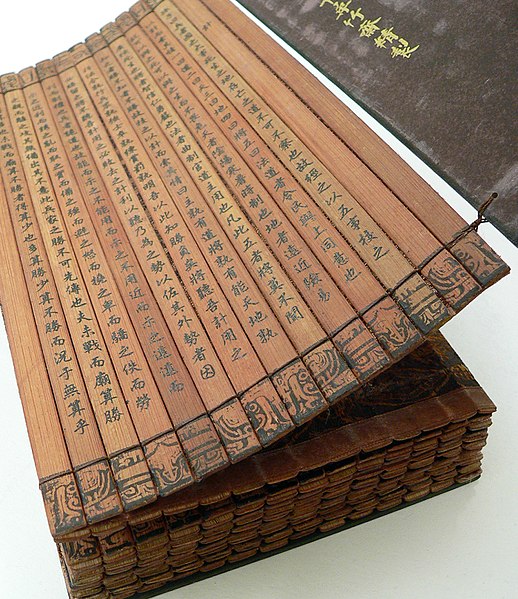
The Art of War was written in 6th century BC China, yet it is still influencing culture and military tactics around the world today.  Mao Zedong, General Vo Nguyen Giap, Baron Antoine-Henri Jomini, and General Douglas MacArthur all claimed to have drawn inspiration from the work. The information and advice contained in this slim volume is timeless and valuable.


Before I read it, I wasn’t quite sure that War would be that interesting; it might just have been a dry book of tactics organized into dozens of subsections. But as I began listening to it I found myself stopping often to take notes for further reference, the content was so fascinating. Far from dry, this was a lively, passionate, interactive kind of rulebook, peppered with stories and legends exemplifying the subjects Sun Tzu was explaining. I read about ancient battles and sudden reversals of fortune, witty maneuvering and plenty of bloodshed.


One of Sun Tzu’s major themes is that one can only plan so far. It is the virtue of preparedness that will make one a victor. If one is ready for anything, in any situation, then success is almost assured. Sun Tzu explains how to gain victory in easy terrain, difficult terrain, neutral terrain, narrow terrain, dangerous terrain, and distant terrain, but when it comes down to it it’s mostly all about having quick reactions and making the best of bad situations. Always have a trick up your sleeve, always give yourself plenty of options when possible.


There are so many little gems of wisdom in this book, such as the five ways of winners:


1. Those who know when to fight and when not to fight
2. Those who know how to use the large or small
3. Those who agree on superior and inferior objectives
4. Those who prepare to lie in wait for the unprepared
5. Those who lead without interference from a ruler


I would definitely recommend reading this book if you have any interest in military tactics or stories of ancient China. I found it intriguing and enjoyable!  


Tata for now,
Abby Rogers

Sunday, April 4, 2010

Book #5: The Return of the Native


WARNING: If you don't already know the plot-line of this book and have any intention of reading it, I have included spoilers in this review!


"The sea changed, the fields changed, the rivers, the villages, and the people changed, yet Egdon remained." 
- Thomas Hardy, The Return of the Native, Book 1, Chapter 1


I admit it, the main reason I listened to this book was because it was narrated by one of my all-time-favorite actors, Alan Rickman. I don’t know about you, but his voice comes as near as anything to sending chills down my spine. Thankfully Return was also a classic book, so I could count it on my reading list J. 


First of all I will address the style of the book. I was prepared for Hardy’s writing by having read Tess of the d’Urbervilles last year, but it could be a little tedious for someone new to the style. Hardy is one of those people who can spend an entire chapter writing about a landscape, and pages of description about a character’s external appearances and inner character. He does it without being tedious, however, always weaving in such brilliant metaphors and similes that he keeps a reader’s interest.


Second, the setting. Of course, anglophile that I am, I was thrilled to be reading a novel set in a Wessex moor, the fictional Egdon Heath. The landscape has a great influence on this novel, creating an impression of loneliness and solitude, setting the story in a kind of inner world that serves to enhance the glamour of far off places like Paris. Characters are often described by the ways they react to the heath: some feel trapped by it, others revel in its wild, untamed beauty.


Apparently Return stirred up quite a bit of controversy when it was serialized in the magazine Belgravia back in 1878. The story deals with issues that were touchy in Victorian England, such as a deeply-flawed heroine and themes of illicit love. I found the book rather alarming in places where it questioned, nay, denied God’s goodness to man, treating the Creator as if He simply played around with humans and didn’t much care what happened to them. 


The native who returns in the story is the wise and wonderful Clym Yeobright who has come back home to the heath with grand ideals of running a school for the peasant children. He is deeply devoted to his mother, but their relationship is strained to the breaking point when Clym decides to marry the beautiful and mysterious Eustacia Vye. His mother believes it imprudent, but Clym is in love. 


Eustacia seems to me to be the exact wrong person for Clym and I can’t imagine how he ever thought he could be happy with her. The man loves the moor and would be happy living in a hovel, Eustacia just wants to have passionate love and a life of beauty in Paris. I believe that she really loved Clym, but she also deluded herself into thinking that he would take her with him to live abroad, and was quite upset and disillusioned when she realized that this was not to be.


The divisions that Clym and Eustacia’s marriage creates are widespread and deep. The mother, a cousin, a few old lovers, and a couple of new ones, all collide and scrape against one another in the rushing tumble of misfortune and grief that seems to fall heavier upon them as every day passes. 


If I learned anything from this book it is that if one needs to do anything (visit a relative, write a letter, deliver something entrusted to you, etc.) do it immediately, or it’s bound to be too late and devastation will inevitably result. Also, if you love someone and believe that they are almost 100% right for you (heeding mother’s advice is good too), marry them, if you don’t, don’t marry them. If the characters in this story followed these two simple rules they could have avoided so much grief. Halfway measures just mess things up terribly. 


I was at first rather jarred by the way the book ended, tying up some loose strings in a tidy little epilogue that seemed to want a happily-ever-after despite the dull, depressing nature of the rest of the book. Then I found out that Thomas Hardy had originally intended the novel to end as a tragedy. However, he submitted to the pressure of his readers and tacked on a happy ending. 


All in all I’m glad I read it, but I wouldn’t pick it up again. The plot is so depressing, all about thwarted hopes and hellish fates.  Ah well, what are classic novels for if not to increase our appreciation of our own sane, normal lives?

Wednesday, February 24, 2010

Book #2: Short Stories by Guy de Maupassant


WARNING: If you don't already know the plot-line of these stories and have any intention of reading it, I have included spoilers in this review!


"It is the lives we encounter that make life worth living."  
-Guy de Maupassant


Also on the audiobook of The Metamorphosis were seven short stories by Guy de Maupassant (don’t even try to pronounce it). I will go over each one briefly:


1. The Hand—A judge recounts the mysterious case of an Englishman who was found dead in his home, the only explanation for his death being that the severed hand of his enemy (which he kept around the living room as an accent piece) had strangled him. Weird, creepy story.


2. The Piece of String—A thrifty old man picks up a piece of string from the ground. Through an odd chain of events it becomes rumored that he was actually picking up someone’s lost wallet. The poor man’s reputation is shattered and he goes mad, protesting his innocence as he lays dying. Pointless story, presumably  about he pointlessness of life.


3. The Diamond Necklace—My mother read this story in high school and remembers it with a sickening feeling to this day. A poor woman borrows a friend’s diamond necklace for one evening of glamour, then loses it. The woman and her husband buy another necklace, give it to the friend without telling her of the substitution, then spend the next ten years of their lives working themselves to death the pay their debts. After this time the poor woman meets her friend in the street one day and decides to tell her of the substitution, now that everything is finished and paid back. Wouldn’t you know it, the diamonds in the original necklace had been false and were worth next to nothing. Very depressing.


4. A Crisis—I’m not sure that this is the right title for the story, but it was about a man who has had many, many affairs and has decided with his wife that they will live completely separate lives though staying in the same house. However, he falls in love with his wife again and wants to spend some “quality time” with her. She refuses however, relenting only on the condition that he pay her just as much money as he used to pay his former mistresses. A very strange little tale.


5. The Will—A woman dies and leaves everything to her lover, and after him, her son, announcing for the first time that this son was not the child of her husband. Much to said husband’s alarm.


6. The Inn—A horrible story about a young man who stays in an inn high up impassible snowy mountains with an old man. The old man goes out in the snow one night and dies, and the young man is wracked with guilt. He drinks all the brandy in the inn, then goes stark raving mad. He even kills his dog (unintentionally). Wretched.


7. Was it a Dream?—A man visits the grave of his beloved mistress and decides to spend the night. After dark all of the skeletons come out of their tombs and erase their epitaphs (He loved his family, was kind and honorable, and died in the grace of the Lord) and rewrite the truth (He hastened his father's death by his unkindness, as he wished to inherit his fortune, he tortured his wife, tormented his children…). The man is shocked and grieved to find that even his love, whom he thought perfect in every respect, was unfaithful to him.


Very depressing, hopeless, meaningless stories. My life has meaning and purpose, do these stories only resonate with those who have none? Why is this considered wonderful literature? Please give me some insight on these matters.


Tata for Now,
Abby Rogers

Tuesday, February 23, 2010

Book #2: The Metamorphosis

WARNING: If you don't already know the plot-line of this book and have any intention of reading it, I have included spoilers in this review!


"That was the voice of an animal." 
-Franz Kafka, The Metamorphosis (p. 8) 


“As Gregor Samsa awoke one morning from uneasy dreams he found himself transformed in his bed into a gigantic insect.” So commences Franz Kafka’s entirely too famous story—The Metamorphosis. 


Gregor Samsa is a traveling salesman who, upon realizing his hideous transformation seems a little less than disturbed, dispassionate even. He doesn’t seem to wonder why, he asks no questions. Instead, he seems worried about what a horrible job he has and hopes that he can haul his bug-self out of bed, get dressed and get to work on time.


The entire story takes place in the Samsas’ apartment, which I assume is located in 1915 Prague. Over the next several months we see Gregor’s family—a mother, father, and sister, Grete—cope with his metamorphosis and the problems that this transformation creates.


Each member of the Samsa family reacts differently to the change in Gregor. Mr. Samsa seems angered by the event and treats his son like a senseless animal, locking him in his bedroom and chucking fruit at him when he escapes. His mother, who is a very sick old woman, holds a deep affection for her son and wishes to see him very much, but the other two keep her away from him (she does get the chance to see Gregor once, and promptly faints dead away). Grete is a very complex character, who is at first the only member of the family who bothers to care for Gregor; she brings him food and cleans his room. She feels a melodramatic sense of possession of him, and in wishing to spare the rest of her family the horror of seeing her brother she assumes all responsibility for his welfare.


Gregor was the sole provider for his family, but now that he has been forced to quit his job, his family has had to take over. His mother begins sewing underwear, his father takes a job at a bank, Grete gets employment at a shop, and the family takes in three men as boarders. 


All of this work causes the Samsas to draw even further away from poor Gregor. Grete is now so overworked that she doesn’t bother to clean her brother’s room. The passion she once infused into her work has faded away in the light of true responsibility. The entire family grows hopeless, just living day to day, believing that they are some of the most unfortunate people on earth.


Things come to a head one night when the three boarders ask Grete to play the violin for them. She is something of a prodigy, and as Gregor listens to her through his bedroom door, he is moved by a hunger for he-knows-not-what. Beauty? The love of his sister? The boarders now seem disinterested in her music, but Gregor crawls out of his room to approach Grete, to let her know that, even if no one else does, he appreciates her music. However, things come to a sudden halt when the boarders see the massive insect and are struck with terror. They cause an awful commotion and immediately give notice. 


By this time Grete has had enough. She is much changed from the little girl of a few months ago who cried in her room at the thought of her brother losing his job. She is now a confident leader and demands that they “must get rid of this thing.” She convinces her father that this insect is not Gregor or it would have had pity on them and left long ago.


Gregor, huddled in the darkness of his filthy bedroom, understands his sister’s wish. He loves his family and decides that he will disappear as soon as possible, for their sakes. 


The charwoman comes into the apartment early the next morning to find Gregor’s lifeless insect-body, then rushes to tell the family that he has died. They are at first shocked, then relieved. The boarders come out of their room demanding breakfast, and one imagines that their threats of leaving the night before and the consequences of those threats were probably meaningless and unnecessary.


The story ends with the Samsa family, or what’s left of it, taking a tram into the countryside. They all realize that they actually enjoy the independence they have found in working jobs of their own, and begin making plans for the future.


The Metamorphosis is a story of despair. We know, almost from the very beginning, that Gregor has very little chance of changing back into his human self. He is doomed, as is the happy tranquility of his family.


Is there a purpose to this story? A secret symbolism that unlocks some deep meaning? One person said, “Kafka is sending a message of hidden worth.  It's great to have people to depend on, but never give up on your own dreams to do something wonderful with your life.” Another wrote, “The story has been interpreted as everything from religious allegory to psychoanalytic case history, but works because, though written nearly a century ago, Kafka's fantastic imaginings convey a reality of their own. We surrender to Gregor's experience, which in a way becomes ours.”


Excuse me, but his experience becomes ours? Call me a philistine, but I’m afraid that I don’t appreciate Kafka’s masterpiece in quite this way. It seems to me exactly what Kafka himself said about it, “It’s only my own personal spectre of horror. It oughtn’t to be printed at all…It is without meaning.” Also, “No one, through his own lack of hope should make the condition of the patient worse. For that reason, all my scribbling is to be destroyed.” But it wasn’t destroyed. And today we read the Metamorphosis, and wonder about the meaning.


Has anyone else here read this? Please leave comments!

LinkWithin

Related Posts with Thumbnails